



The History Of Braces

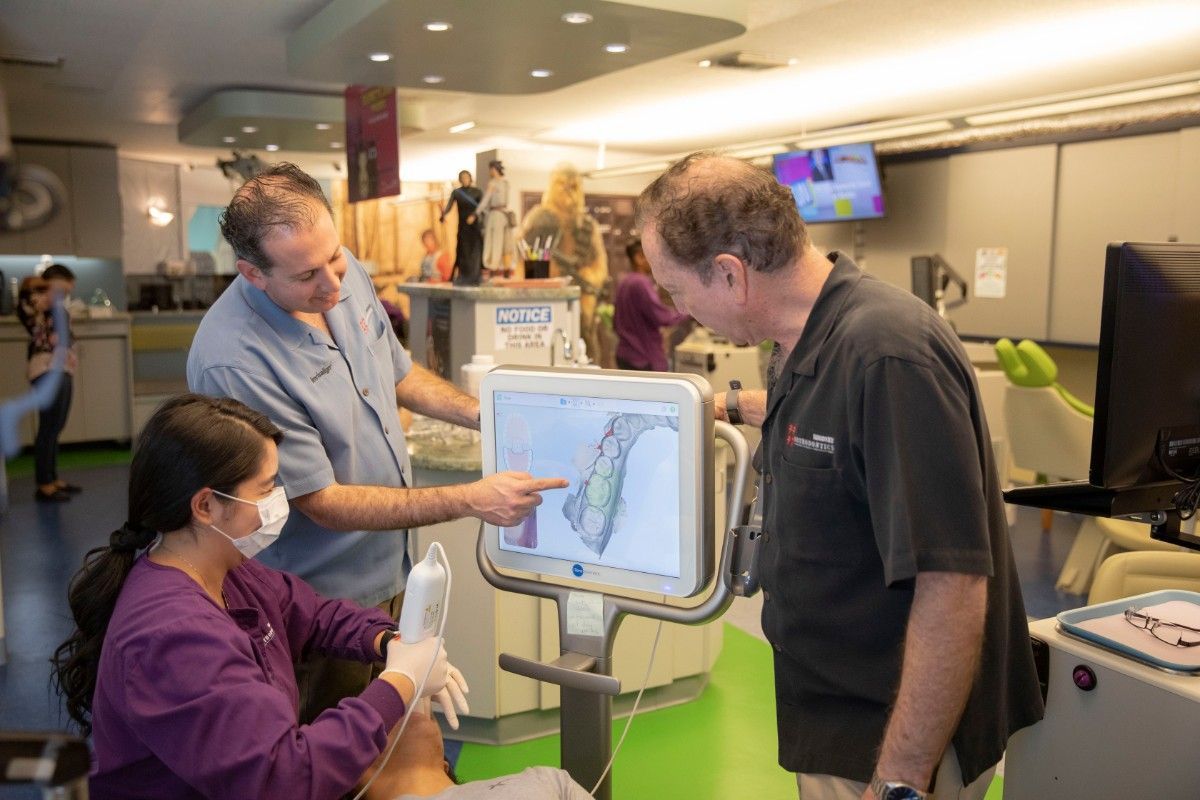
Modern orthodontics looks quite a bit different than its predecessors, with high-tech innovations like digital imaging, 3D oral scanners, and computer modeling common in many practices these days. When combined with the various treatment options available, orthodontists are able to provide an orthodontic experience that is safer, more efficient, and more successful than ever before!

When you consider how cutting-edge orthodontics tends to be these days, it might surprise you to learn that humans have actually been trying to straighten their smiles for thousands of years. In fact, multiple archaeological sites have found evidence of primitive versions of orthodontic treatment. When you consider that some of the earliest attempts involved “techniques” like bloodletting and used materials like catgut and crude metals, today’s treatments seem like a walk in the park! (And yes, catgut is exactly what it sounds like.)

Thankfully, investing in orthodontic treatment now means you’ll be given the opportunity to choose a treatment that works best for your smile, lifestyle, and goals. Here at Brodsky Orthodontics, we’re proud to offer miniature metal braces, as well as more aesthetic options like clear ceramic braces, lingual braces, and Invisalign clear aligners. While we’re big fans of modern orthodontics, it’s still fun to take a look back at where it all began! Let’s take a closer look at what the first few centuries of orthodontics looked like, and how it evolved into all the treatments we’re able to offer patients today.

Going back to the B.C.

Worries about crooked teeth are nothing knew. If you know where to look, you can see cultural and social concerns about uneven smiles going all the way back to the ancient Egyptians. Mummies have been discovered with gold bands around their teeth, and researchers believe that these may have been used along with catgut to close dental gaps. There are also multiple mentions of dental disorders in some of the earliest medical writings found, including special notes that describe the smaller jaws and narrower dental arches that humans have evolved with.

If you’re familiar with the Hippocratic oath, you might be interested to know that its namesake Hippocrates wrote about orthodontic issues as early as 400 B.C! He was especially invested in his suspicion that irregular palate arches and crowded teeth could cause a number of corresponding issues, like headaches and discharge from the ears. Early Roman physician Aulus Cornelius Celsus got in on the game, too, and encouraged caregivers to apply daily pressure to a child’s new teeth with their fingers in an effort to move them into better positions.

Then things got pretty quiet for a while. Aside from a few interesting attempts at tooth alignment, there wasn’t much happening in orthodontics until the 18th century, when there was a flurry of development.

Wall display case with colorful collectible figures on shelves in a beige room, with framed art on the walls.

Breakthroughs in the 18th-century

The 18th century was an exciting time for orthodontics, as some very important discoveries were made. Pierre Fauchard played a big role in this, which is why he is sometimes referred to as the “father of modern dentistry.” The 18th-century French physician contributed a great deal to contemporary dental and orthodontic treatment, beginning with an inadvertent discovery. When he began keeping his patients’ dentures in place by anchoring them to molars, he stumbled upon one of the basic principles of braces. He also developed a number of other techniques for straightening teeth. This included filing down teeth that jutted too far above the adjacent teeth, and using a set of metal forceps he called a “pelican” to create space in between crowded teeth.

Above all else, Fauchard is probably best known for his invention of what could technically be considered the first orthodontic appliance: the bandeau. This was a horseshoe-shaped piece of metal that was placed outside the teeth, and string or wire was then used to tie the teeth to the arch. The bandeau was meant more to expand a person’s dental arch and not necessarily for straightening each tooth, but the basics of it were similar to modern braces in that it relied on slow, steady pressure to move teeth gradually. The bandeau wasn’t able to make any regular adjustments, though, which made it hard to move the individual teeth in different directions.

However basic as it was, the bandeau was used continuously up until about 1819, when Christophe-François Delabarre developed the wire crib. This appliance was usually made of metal wires that had been bent and soldered together to form a “cage” that fit tightly over and around the teeth. Strings or metal springs could then be attached and used to apply a constant force to teeth, gradually moving them into better positions. The wire crib worked in much the same way our current braces and aligners do, and its invention tends to be regarded as the birth of contemporary orthodontics. As a matter of fact, it’s the precursor to many of the appliances we still use to this day!

Person using a robotic surgery console in a clinical training room with a monitor showing a spine model

Modern orthodontics come to America

Edward Angle was an American pioneer who specialized in what he called tooth “regulation.” By the early 20th century, he had sought out and been awarded over 30 patents for a variety of tools that he used to treat misalignments of the teeth and jaws. This included a metallic arch expander and the “edgewise appliance,” a metal bracket that formed the basis for most of the braces we use today. Angle branched out at one point and began selling all of these standardized parts together as the “Angle system,” which other orthodontists could purchase for use in their own practices so they no longer needed to design and produce appliances for each new patient.

There were a number of other significant orthodontic contributions during this time, as well, including:

The “occipital anchorage” was an early form of headgear developed by J.S. Gunnell in 1822 to exert gentle pressure on the teeth.

In 1839, Charles Goodyear invented vulcanized rubber. Within just a few years, an American dentist named E.G. Tucker had begun to use it in orthodontic appliances.

“The Dental Art” was written and published by Chapin A. Harris in 1840. This classic book of dentistry outlined a number of innovative practices, such as soldering knobs onto bands to assist with tooth rotation, and applying gold caps to molars to help open the dental bite.

Over the rest of the next century, dentists and early orthodontists continued to make huge strides in understanding how the teeth and jaws work, but braces themselves remained largely unchanged during this time. It took until the 1970’s to see any major new advances! Around this time, stainless steel began to replace gold and silver as the most popular choice for wires thanks to its shapeability. Dental adhesives were also invented, allowing orthodontists to stick the brackets to the surface of the teeth instead of winding wires around each tooth to anchor the brackets. These developments reduced the cost of braces significantly, making them more affordable and therefore more widely available than they ever had been before.

Make history with a smile from Brodsky Orthodontics

As we look back through the history of orthodontics, it’s clear that humans have strived to find the best way to straighten their smiles and align their teeth and jaws for centuries. Fortunately, we now have the means to do so safely and effectively, and don’t even need to bring catgut into it! Brodsky Orthodontics is proud to be part of an established tradition of creating healthy, functional smiles that look beautiful and last a lifetime. To learn more about how modern orthodontics can benefit you and your family, get in touch with us today to schedule a FREE consultation at our Lakewood office!

Your Best Smile
Starts Here.

Take the first step toward a smile you love. Schedule a free consultation with Brodsky Orthodontics and explore a treatment plan designed for you.

Share this article

Recent Posts

Smiling teen in a red T-shirt standing outdoors on a sunny sidewalk.
October 6, 2026
Discover the Brodsky Orthodontics new patient experience and learn what to expect from your first consultation, personalized treatment plan, and smile journey.
Smiling man showing metal braces against a bright white background
October 6, 2026
Learn why teeth can shift even after braces and how Brodsky Orthodontics helps patients protect their results with proper retainer wear and long-term care.
Woman smiling into handheld mirror while seated in a dental office, with a man beside her.
By Dr. Joel Brodsky • July 24, 2026
Learn about modern orthodontic options that eliminate headgear. Schedule your free consultation today!

Person wearing glasses and a lanyard sits indoors, with a blurred figure standing in the background.
By Dr. Joel Brodsky • June 4, 2026
Understand palatal expanders for kids. Learn about their benefits & treatment process. Schedule a free consultation today!
Smiling worker in a blue uniform leaning over a desk in a bright office or clinic
By Dr. Joel Brodsky • May 7, 2026
Explore the nasty side effects of chewing gum, including TMJ strain & headaches. Stay informed for better dental health!

Smiling woman sitting on a couch, holding a mug in a cozy living room.
By Dr. Joel Brodsky • December 16, 2025
Enjoy holiday treats safely with braces! Get tips on safe choices & try our braces-friendly recipes from Brodsky Orthodontics.
Clinician viewing a 3D spine model on a medical monitor in a clinic office
By Trenton Elkins • November 10, 2025
Explore how Invisalign technology transforms smiles with discreet, comfortable aligners. Schedule your free consultation today!
Two people talking across a desk in a clinic office, with a phone and framed photos in the background
By wpengine • October 28, 2025
Learn what to expect after your orthodontic consultation. Explore treatment options & financial planning for your smile journey.
Woman adjusting a mouthguard in front of a mirror, wearing a navy and gray sweater.
By Dr. Joel Brodsky • September 15, 2025
Compare traditional braces & Invisalign clear aligners at Brodsky Orthodontics. Find the best fit for your smile today!
Woman flossing teeth in a dental clinic, smiling while seated in a dentist’s chair.
By Dr. Joel Brodsky • August 25, 2025
Learn why clear aligners like Invisalign are popular for discreet teeth straightening. Schedule your free consultation today!
Show More