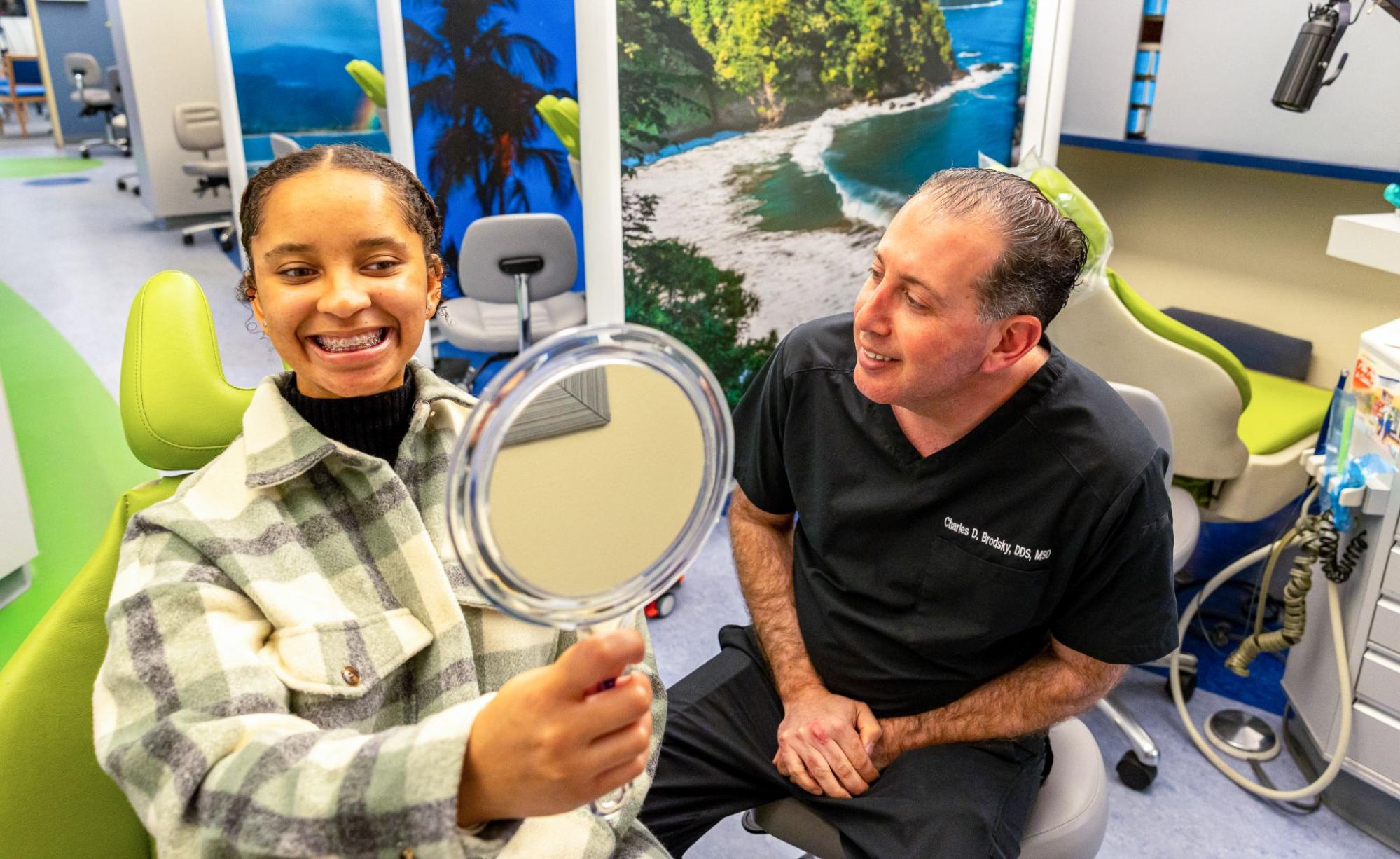
Yes, orthodontics can be done without headgear in most cases today. Modern appliances like clear aligners, self-ligating braces, palatal expanders, and temporary anchorage devices apply corrective force from inside the mouth, guiding teeth and jaws into place without bulky external hardware. At Brodsky Orthodontics, most patients complete treatment without ever needing traditional headgear.
Orthodontic care has changed a lot over the past several decades, and the tools we use today let us build a Brodsky Smile with far more comfort and discretion than the appliances your parents may remember. What once meant bulky straps and visible hardware can now happen quietly, with results that look and feel natural.
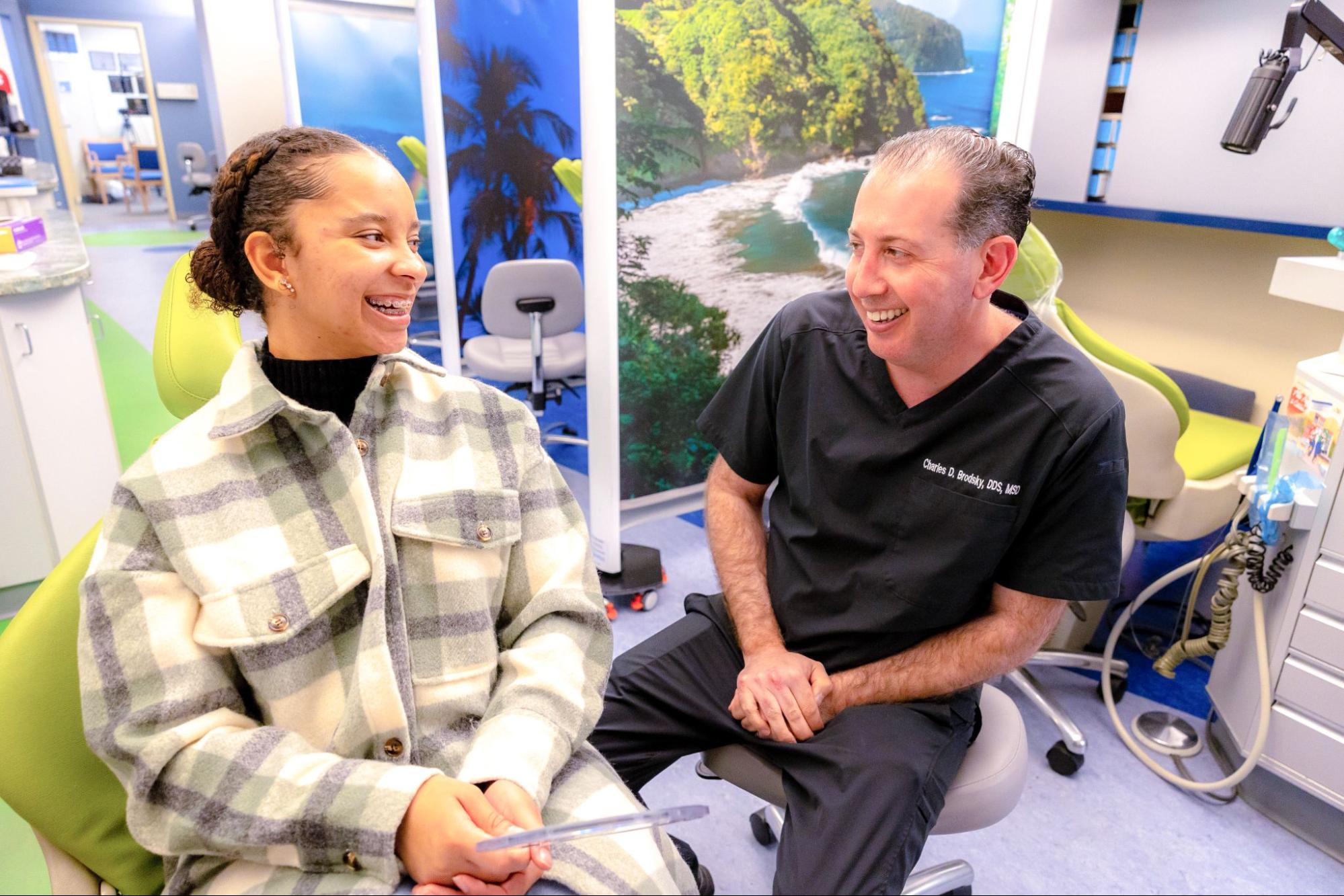
What Is Headgear and Why Was It Used?
Headgear is an external orthodontic appliance that uses straps around the head or neck to apply corrective force to the teeth and jaw. It connects to bands on the back teeth and pulls or pushes them into better alignment. Orthodontists historically prescribed it to correct significant overbites, underbites, and crowding, especially in growing children whose jaw structure was still developing.
Traditional headgear did its job well, but wearing it wasn’t easy. Kids and teens were asked to wear the appliance 10 to 14 hours a day, often overnight and after school. It was bulky, highly visible, and uncomfortable during sports, sleep, and social events. Compliance was a constant challenge because the appliance couldn’t be hidden from friends or classmates.
That’s why so many families ask about alternatives before even sitting down for a free consultation. The good news? Modern orthodontics has reduced the need for headgear dramatically. With better diagnostics, digital 3D imaging, and appliances that apply force internally, we can address most of the same issues without the straps and buckles that made headgear so hard to live with.
How Headgear-Free Orthodontic Treatment Works
Headgear-free treatment works by applying corrective force from inside the mouth instead of outside. Brackets, wires, clear aligner trays, palatal expanders, and small anchor devices work together to move teeth and guide jaw growth. Digital 3D imaging maps every planned movement in advance, so your orthodontist can shape a precise plan without relying on external appliances.
Here’s how the pieces fit together:
- Clear aligners use a series of custom trays to shift teeth gradually. Each tray moves specific teeth a small amount before you switch to the next one, and the whole set is mapped out before treatment begins.
- Modern braces use brackets and wires that apply steady, gentle pressure. Newer wire technology means fewer adjustments and more comfort between visits.
- Temporary anchorage devices (TADs) are tiny, medical-grade anchor points placed in the jaw. They give the orthodontist a fixed spot to push or pull from, doing the same job headgear used to do, without anything showing on the outside.
- Palatal expanders widen the upper jaw in growing children, creating space and correcting crossbites before they become larger issues down the road.
- Two-phase treatment starts earlier, often between ages 7 and 10, to guide jaw growth while it’s still happening. Addressing skeletal development early often eliminates the need for headgear later.
Your treatment plan at Brodsky Orthodontics begins with easy, painless digital scans and 3D imaging using our i-CAT system. From there, we build the plan around your specific bite, growth pattern, and personal goals for your smile.
Benefits of Headgear-Free Orthodontics
Avoiding headgear offers five key benefits: discretion, comfort, better compliance, fewer lifestyle restrictions, and beautiful smiles for a lifetime. These day-to-day advantages matter most for teens and adults who care about how treatment looks and feels while they go about their normal routines.
How does headgear-free treatment look and feel day to day?
- Discretion. Clear aligners and tooth-colored braces are far less noticeable than external straps. You can smile in photos, present at school or work, and feel confident throughout treatment.
- Comfort. No bulky hardware pressing against your face or neck. Modern appliances sit inside the mouth and cause much less irritation.
- Better compliance. Fewer wear-time demands mean patients actually follow through. Aligners come out for meals and brushing, and braces stay on quietly in the background.
Will everyday life still feel normal during treatment?
- Fewer lifestyle restrictions. Sports, band, cheer, sleepovers, and everyday social life continue without the interruptions headgear used to cause.
- Reliable results. With today’s technology, we can deliver beautiful smiles for a lifetime while you keep living your life the way you always have, without the awkward hardware getting in the way.
Headgear vs. Modern Alternatives: A Comparison
Most cases we see at Brodsky Orthodontics can be handled well without headgear. Here’s how the main options stack up:
| Appliance | Visibility | Comfort | Wear Time | Best For |
|---|---|---|---|---|
| Traditional Headgear | Very visible (external) | Bulky, restrictive | 10-14 hours/day | Severe growth-related bite issues in kids |
| Clear Aligners (Invisalign) | Nearly invisible | High comfort | 20-22 hours/day (removable) | Crowding, spacing, mild-to-moderate bite issues |
| Lightforce Clear Braces | Low visibility | Comfortable, custom brackets | 24/7 (fixed) | Complex cases, precise tooth movement |
| Metal Braces | Visible but sleek | Comfortable modern design | 24/7 (fixed) | All case types, all ages |
| Palatal Expanders | Hidden inside mouth | Mild pressure initially | 24/7 (fixed) | Narrow upper jaw, crossbite in kids |
| TADs (Anchorage Devices) | Nearly invisible | Minor initial soreness | 24/7 (small device) | Cases that would have needed headgear |
Some complex skeletal cases may still benefit from a combined approach that includes headgear or surgical orthodontics, but these are the exception rather than the rule. For most people behind the smile, clear aligners, modern clear braces, or a combination of appliances will deliver the Brodsky Smile you’re after with far less hassle than older methods required.
Drs. Joel and Charles Brodsky (DDS, MS) hold the DIAMOND PLUS Invisalign Provider designation and have completed over 7,500 Invisalign cases, which gives us deep experience choosing the right alternative for each case.
Cost Factors for Headgear-Free Treatment
The cost of headgear-free orthodontic treatment depends on case complexity, the appliance chosen, and how long treatment lasts. Clear aligners and premium braces systems sometimes cost more than older approaches that relied on headgear, but insurance coverage and financing options help make treatment manageable for most families. According to the American Association of Orthodontists, typical treatment cost range, and your personalized estimate will reflect your specific case.
A few things that shape the final number:
- Case complexity. Mild crowding costs less than a case involving bite correction and expansion.
- Appliance type. Clear aligners, clear braces, and metal braces each carry different price points.
- Treatment length. Most cases run 12-24 months, and longer plans typically cost more.
- Add-ons. Palatal expanders, TADs, or retainers factor into the total.
We offer easy financing with payment plans built around your budget. You deserve a smile you feel great about, and we’ll work with you to build a plan that makes sense financially for your household. Your free consultation includes a personalized estimate, so you’ll know exactly what to expect before making any decisions.
Are You a Candidate for Orthodontics Without Headgear?
Most patients are excellent candidates for headgear-free treatment. If you have crowding, spacing, gaps, or mild-to-moderate bite issues, clear aligners or modern braces can usually handle the case well. Growing children with developing jaw issues often benefit from two-phase treatment, which guides growth early and prevents the need for headgear later on.
Here’s who typically qualifies:
- Children ages 7 and up with early signs of crowding, crossbite, or jaw development concerns
- Teens ready for clear aligners, clear braces, or traditional braces
- Adults looking to transform their smile or correct bites at any age
- Anyone hesitant about visible or bulky appliances
Severe skeletal discrepancies, like a significantly underdeveloped or overdeveloped jaw, may still require a combined approach involving surgical orthodontics. Even in those situations, headgear itself is rarely the answer today. A full evaluation with 3D imaging (i-CAT) at Brodsky Orthodontics gives us a clear picture of your bite, roots, and jaw structure, so we can recommend the best option for you.
Treatment is available for every stage of life, from first grade through retirement. According to the American Association of Orthodontists, children should have their first orthodontic evaluation by age 7, which is exactly when we can spot growth-related issues early and often avoid headgear entirely.
Frequently Asked Questions
Can Invisalign replace headgear?
In many cases, yes. Invisalign, combined with tools like TADs and elastics, can correct bite issues that once required headgear. Drs. Joel and Charles Brodsky (DDS, MS) have used clear aligners for a wide spectrum of cases, including some that would traditionally have needed external appliances. Your evaluation will confirm whether Invisalign is the right fit for your specific bite.
Does avoiding headgear make treatment take longer?
Not usually. Modern appliances often deliver results in a similar or shorter timeframe compared to older methods. Most cases at Brodsky Orthodontics run 12-24 months, whether you choose clear aligners, clear braces, or traditional braces. Case complexity matters more than the type of appliance when it comes to timeline.
Are palatal expanders an alternative to headgear?
Yes, for many growing children. A palatal expander widens the upper jaw from the inside, creating space and correcting crossbites without any external hardware. When used during the right growth window, expanders can prevent the kind of skeletal issues that used to require headgear.
Will results be as good without headgear?
Absolutely. Today’s tools, including clear braces, clear aligners, TADs, and digital 3D imaging, produce outcomes that meet or exceed what headgear delivered in the past. Drs. Joel and Charles Brodsky (DDS, MS) bring decades of finishing experience to every case, which reflects the level of quality possible with modern techniques and careful planning.
Do adults ever need headgear?
Rarely. Adult bone structure is fully developed, so headgear, which was designed to influence growing bones, offers little benefit. Adults with complex bite issues are typically treated with braces, aligners, TADs, or a combination approach that may include jaw surgery for the most severe cases.
Curious whether you or your child can skip headgear and still get a beautiful result? Our warm, family-oriented setting welcomes patients of every age, from first-time evaluations for kids to adults ready for a change. To learn more about your options, schedule your free consultation with Brodsky Orthodontics and let us show you the joy of a Brodsky Smile. Your new, confident smile is just a step away.